
Hey there! As a supplier of Rolling Threading Machines, I often get asked about the maximum wall thickness of the pipe that these machines can thread. It's a super important question, especially for those in the construction, manufacturing, and plumbing industries. So, let's dive right in and explore this topic.
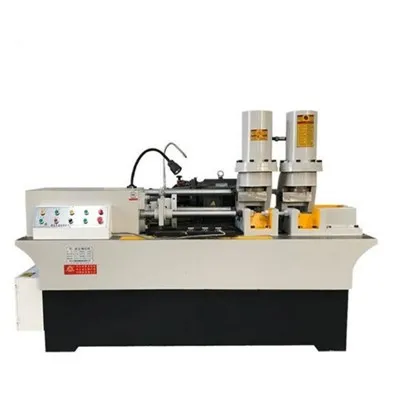
First off, let's understand what a Rolling Threading Machine is. A Rolling Threading Machine is a piece of equipment used to create threads on the outer surface of pipes, rods, or other cylindrical objects. It works by pressing a set of dies against the workpiece, which then rolls and forms the threads. This method is more efficient and produces stronger threads compared to cutting methods.
Now, the maximum wall thickness that a rolling threading machine can handle depends on several factors. One of the main factors is the power and design of the machine itself. Different models of rolling threading machines have different capabilities. For example, a smaller, less powerful machine might be able to handle pipes with a wall thickness of up to 1/8 inch, while a larger, industrial - grade machine could handle wall thicknesses of 1/2 inch or more.
The type of material of the pipe also plays a crucial role. Softer materials like aluminum or brass are generally easier to thread than harder materials like stainless steel or carbon steel. A machine that can handle a certain wall thickness in aluminum might struggle with the same thickness in stainless steel. This is because harder materials require more force to deform and form the threads.
Another factor is the pitch and size of the threads. Finer pitch threads can usually be formed on pipes with thinner walls, while coarser pitch threads might require thicker walls to ensure the integrity of the threads. For instance, if you're threading a pipe with a very fine thread pitch, the machine might be able to handle a relatively thin - walled pipe. But if you're going for a coarse thread pitch, you'll likely need a pipe with a thicker wall.
Let's talk about some examples of different types of rolling threading machines and their capabilities. The Thread Rod Rolling Machine is designed specifically for threading rods. These machines can typically handle rods with a range of wall thicknesses depending on their size and power. Smaller thread rod rolling machines might be suitable for rods with wall thicknesses of around 1/16 inch, while larger ones can handle up to 3/8 inch or more.
The Hydraulic Rolling Threading Machine is known for its high power and precision. These machines use hydraulic power to apply the necessary force to form the threads. They can often handle pipes with relatively thick walls. In fact, some hydraulic rolling threading machines can thread pipes with wall thicknesses up to 3/4 inch.


When it comes to determining the maximum wall thickness for a specific rolling threading machine, it's always a good idea to refer to the manufacturer's specifications. These specs will give you a clear idea of what the machine can handle in terms of wall thickness, pipe diameter, and thread type. You can usually find these specifications in the machine's user manual or on the manufacturer's website.
It's also important to consider the quality of the threading process. Just because a machine can technically thread a pipe with a certain wall thickness doesn't mean that the resulting threads will be of high quality. If you try to thread a pipe with a wall thickness that's close to the machine's maximum capacity, there's a risk of the threads being poorly formed, having inconsistent pitch, or even cracking the pipe. So, it's often recommended to stay within a safe range below the machine's maximum capacity to ensure high - quality threads.
In addition to the factors mentioned above, the lubrication and cooling of the threading process are also important. Proper lubrication reduces friction between the dies and the pipe, which helps in forming the threads more smoothly and can also increase the maximum wall thickness that the machine can handle. Cooling is also essential, especially when threading hard materials or pipes with thick walls. It prevents overheating of the dies and the workpiece, which can lead to premature wear of the dies and poor - quality threads.
If you're in the market for a rolling threading machine, it's crucial to assess your specific needs. Think about the types of pipes you'll be working with, the wall thicknesses you'll encounter, and the thread sizes and pitches you'll need. This will help you choose the right machine for your requirements.
As a supplier of rolling threading machines, I've seen firsthand how important it is to have the right machine for the job. We offer a wide range of rolling threading machines, from small, portable units for light - duty tasks to large, industrial - grade machines for heavy - duty applications. Our team of experts can help you select the machine that's best suited to your needs.
If you're interested in learning more about our rolling threading machines or have any questions about the maximum wall thickness they can handle, don't hesitate to reach out. We're here to assist you in making the right choice for your business. Whether you're a small plumbing contractor or a large manufacturing plant, we have a solution for you.
In conclusion, the maximum wall thickness of the pipe that a rolling threading machine can thread depends on multiple factors, including the machine's power and design, the material of the pipe, the thread pitch and size, and the quality of the threading process. By understanding these factors and choosing the right machine, you can ensure efficient and high - quality threading operations. So, if you're looking to invest in a rolling threading machine, contact us today to start the conversation.
References
- General knowledge of rolling threading machine technology and industry standards.
- Manufacturer's specifications of various rolling threading machines.