


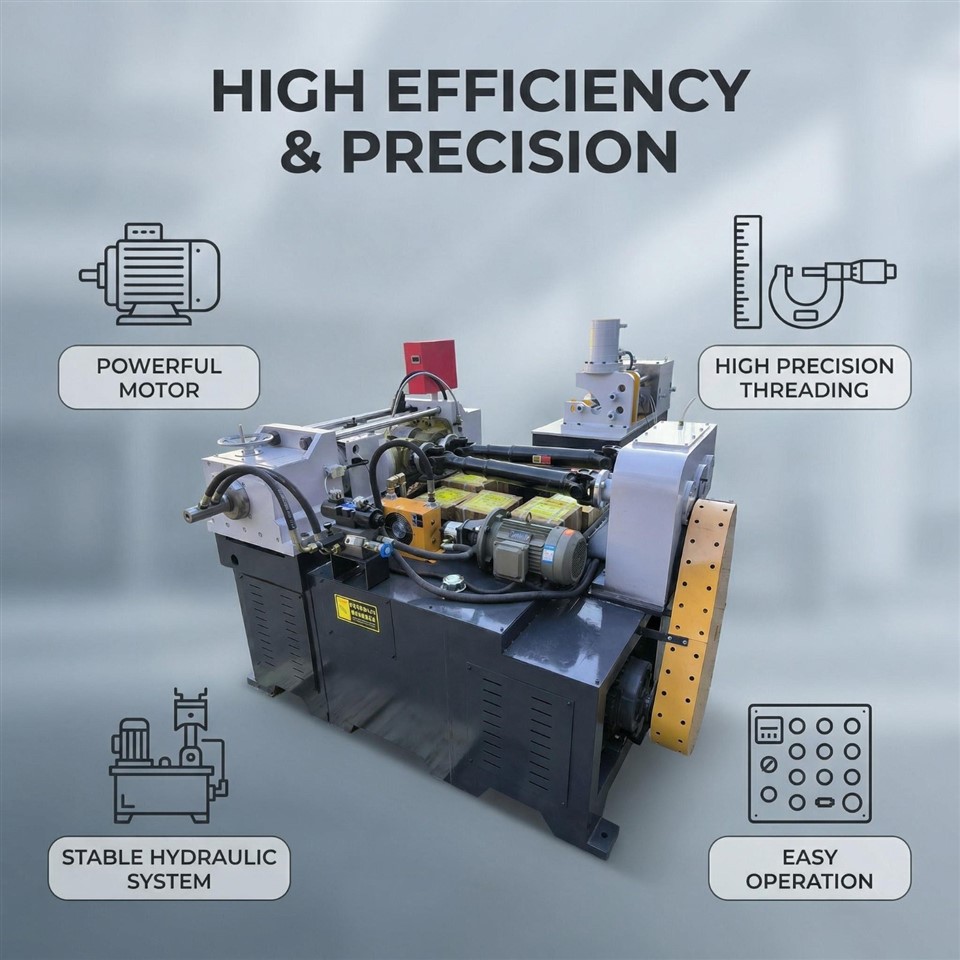
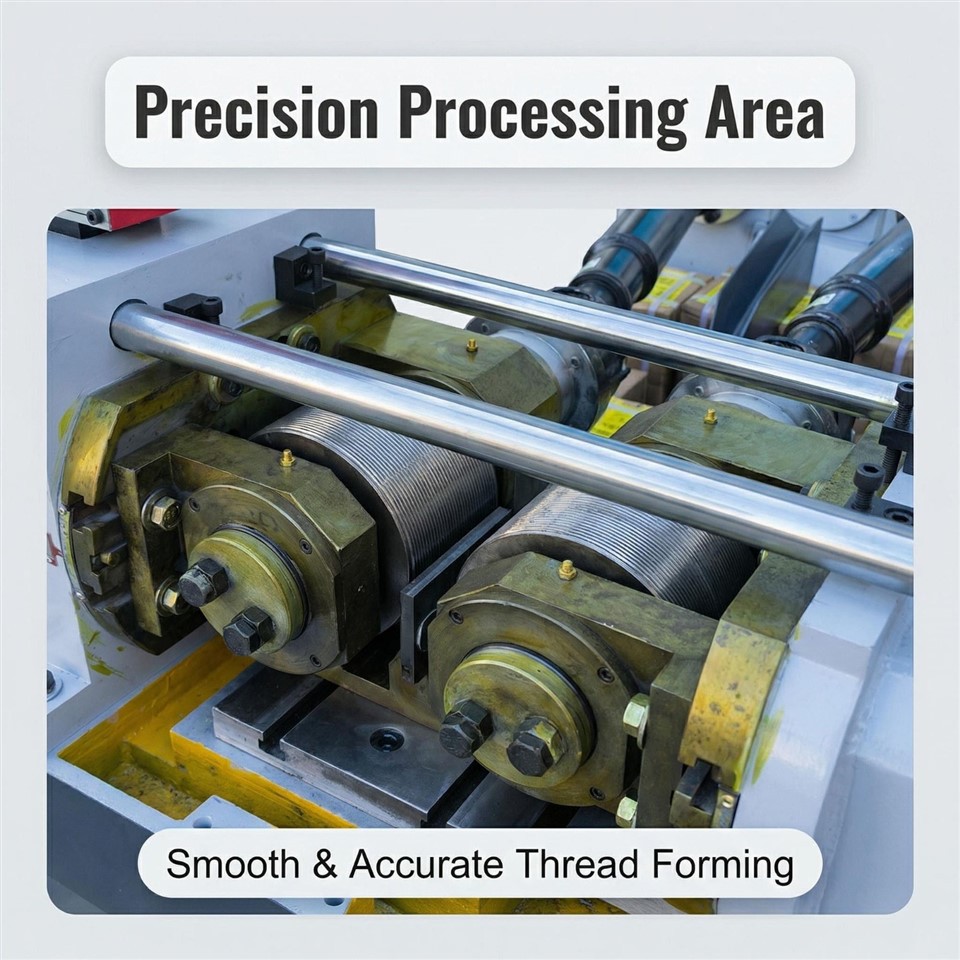
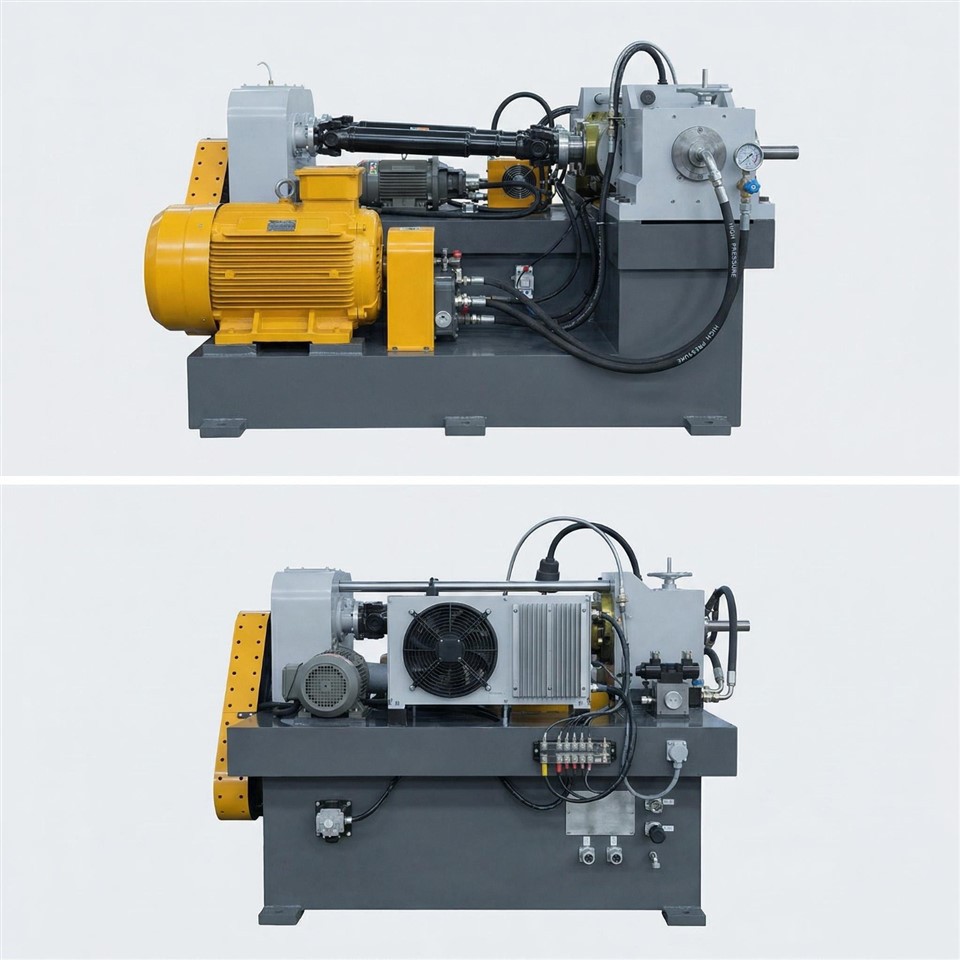
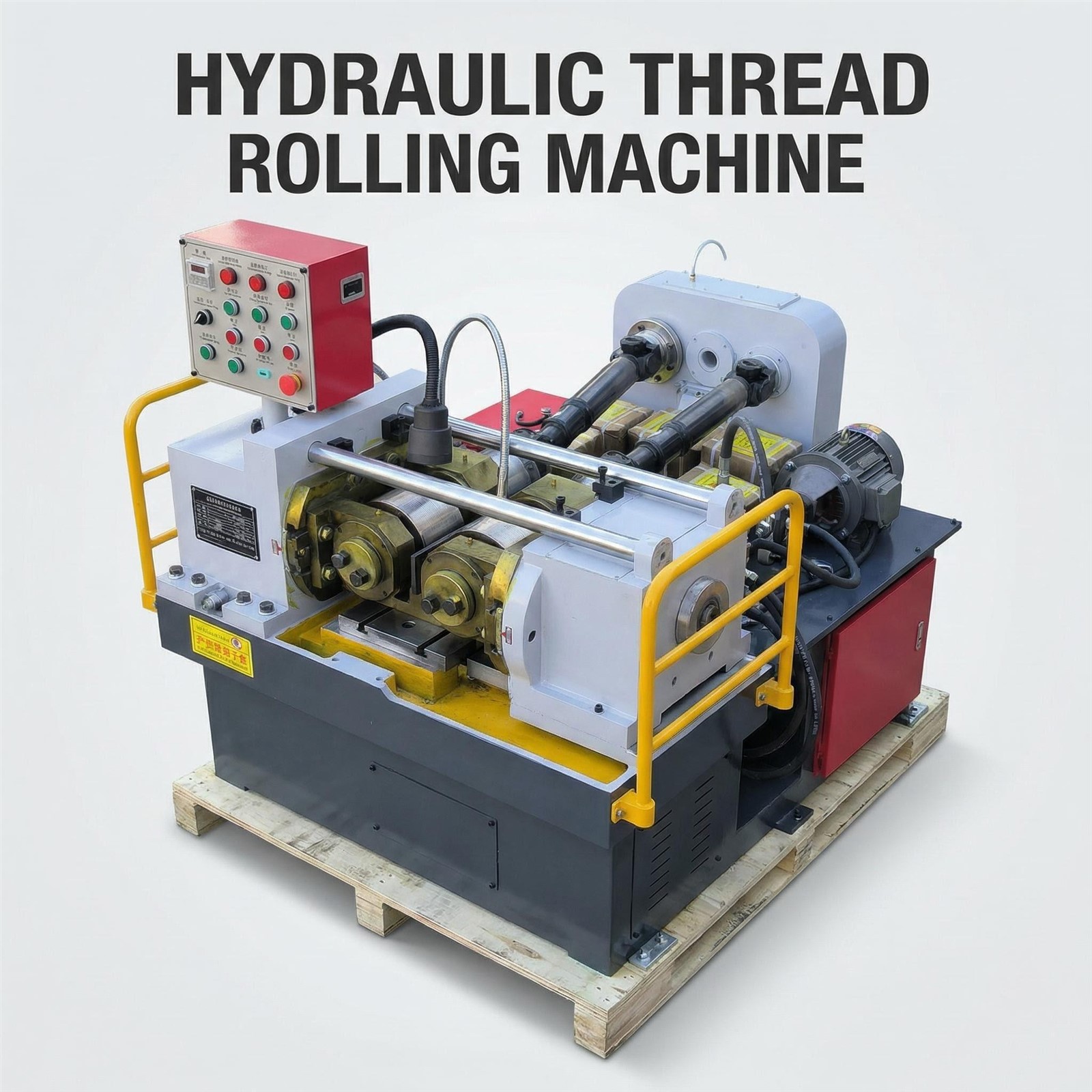
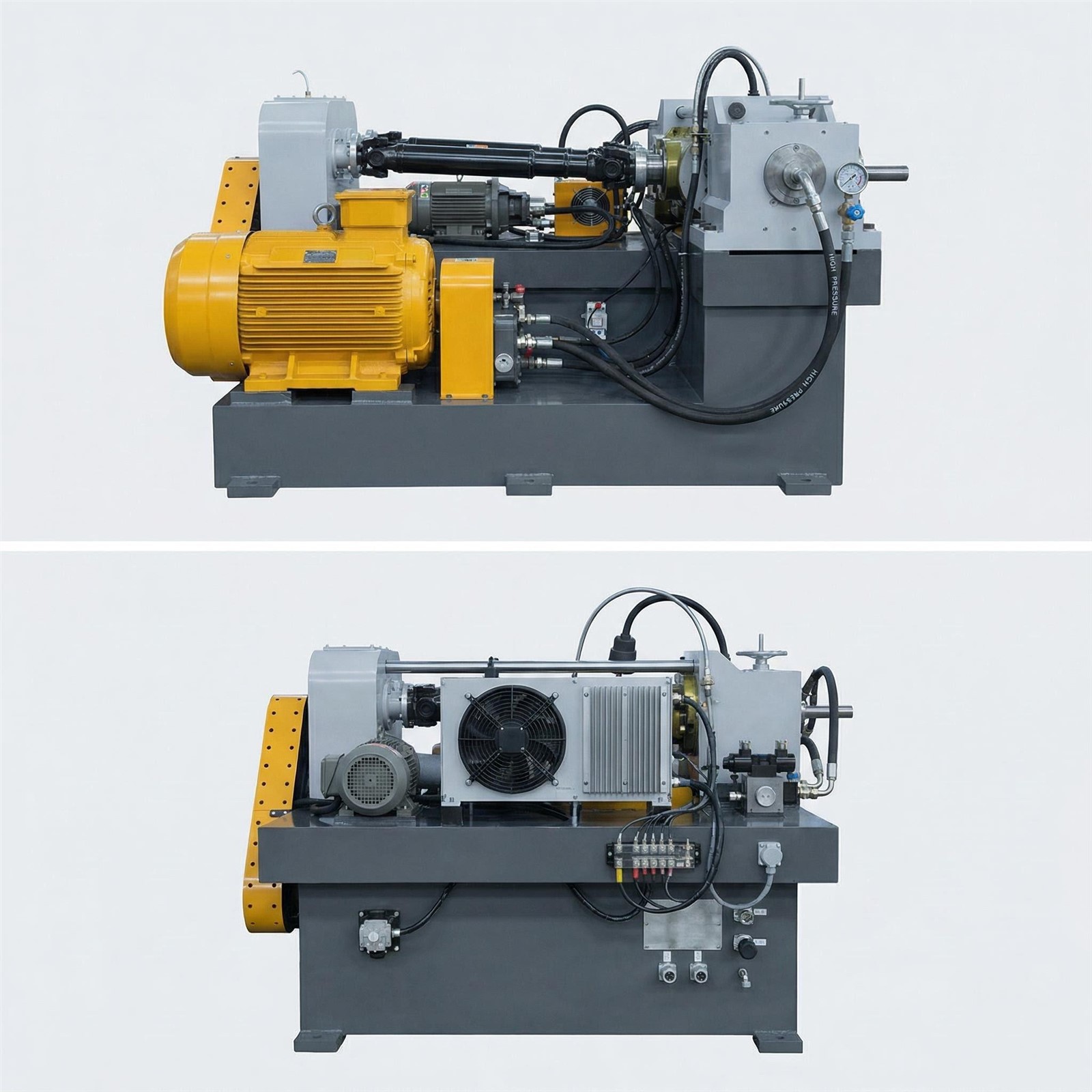
The two-axis hydraulic threading machine is based on the principle of metal plastic deformation. It forms threads by rotating and extruding two thread rolling wheels, saving material and improving thread strength compared to pre-cutting machining. The machine has a hydraulic feed force of up to 15T, is equipped with an optional motor and compatible thread rolling wheels of various sizes, features a thick steel plate welded body that has undergone annealing, and uses dual hydraulic cylinders to drive the feed, with convenient parameter adjustment. It can process multiple materials and is widely used in the automotive, machinery manufacturing, and other fields, providing a stable solution for machining shafts, bolts, and other parts.
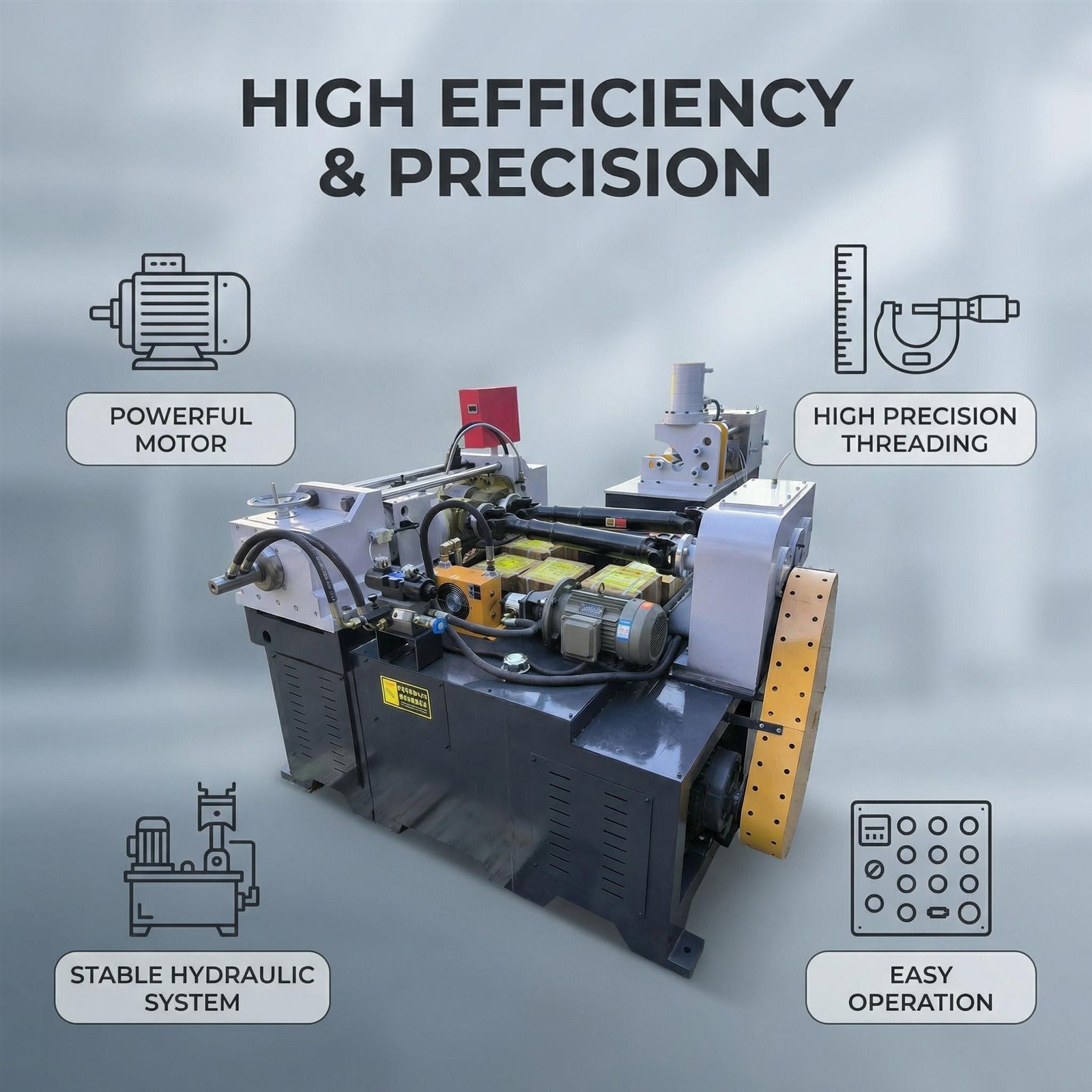
Against the backdrop of increasingly stringent requirements for precision and efficiency in thread processing in industries such as machinery manufacturing and automobile manufacturing, two-axis hydraulic thread rolling machine has gradually become a focus of market attention due to its stable performance and convenient operation, providing a reliable solution for thread processing of various shafts, rods, and steel structure connecting bolts. The core working principle of the two-axis hydraulic thread rolling machine is to use the synchronous rotation and compression of two thread rolling wheels to cause plastic deformation of the workpiece material, thereby precisely forming the required thread. This processing method not only avoids the material waste of traditional cutting processing but also significantly improves the strength and surface finish of the thread. In terms of performance parameters, the equipment has a hydraulic feed force of up to 15T, equipped with a 4.0kW or 5.5kW (optional) mechanical rotary motor and a 2.2kW hydraulic rotary motor, providing stable and ample power output; the thread rolling wheels are compatible with specifications of 54mm inner diameter, 120-170mm diameter, and 30-100mm thickness, meeting the processing needs of various workpiece sizes.
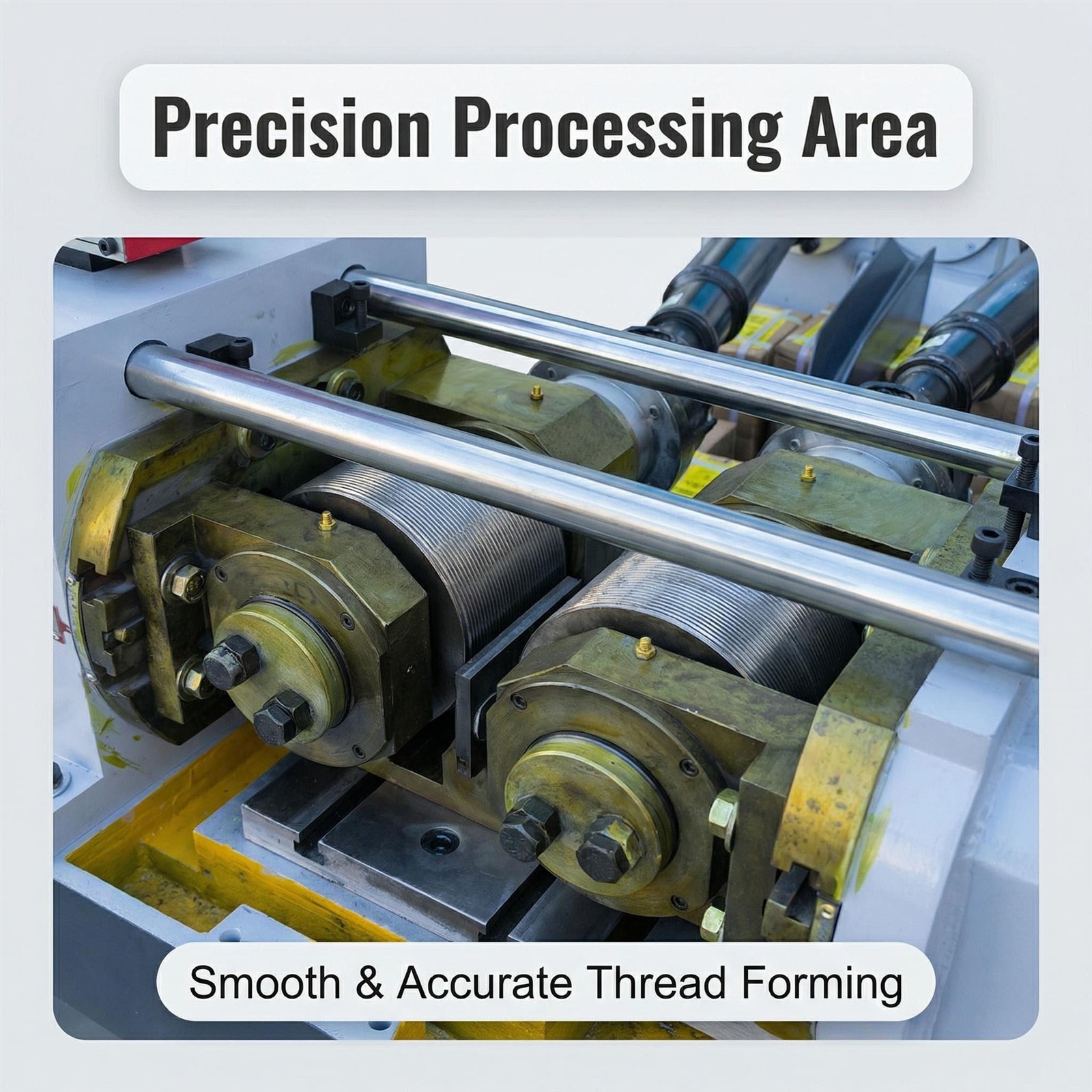
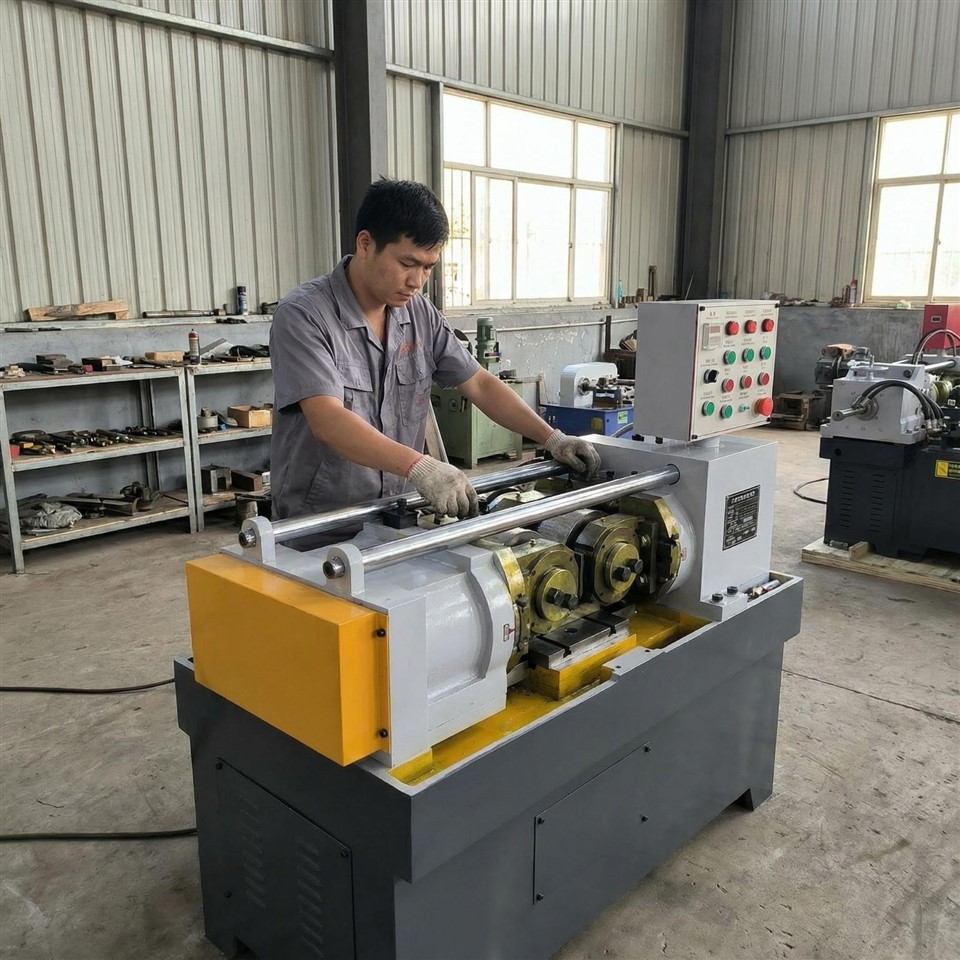
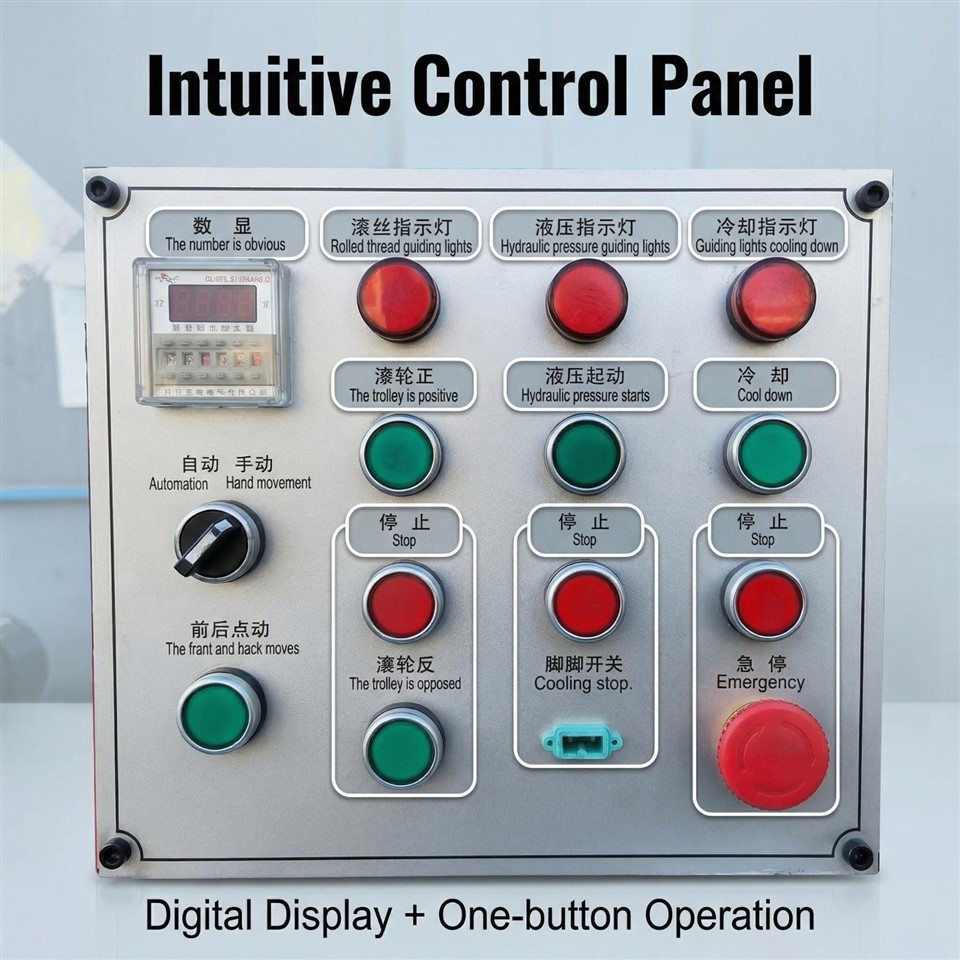
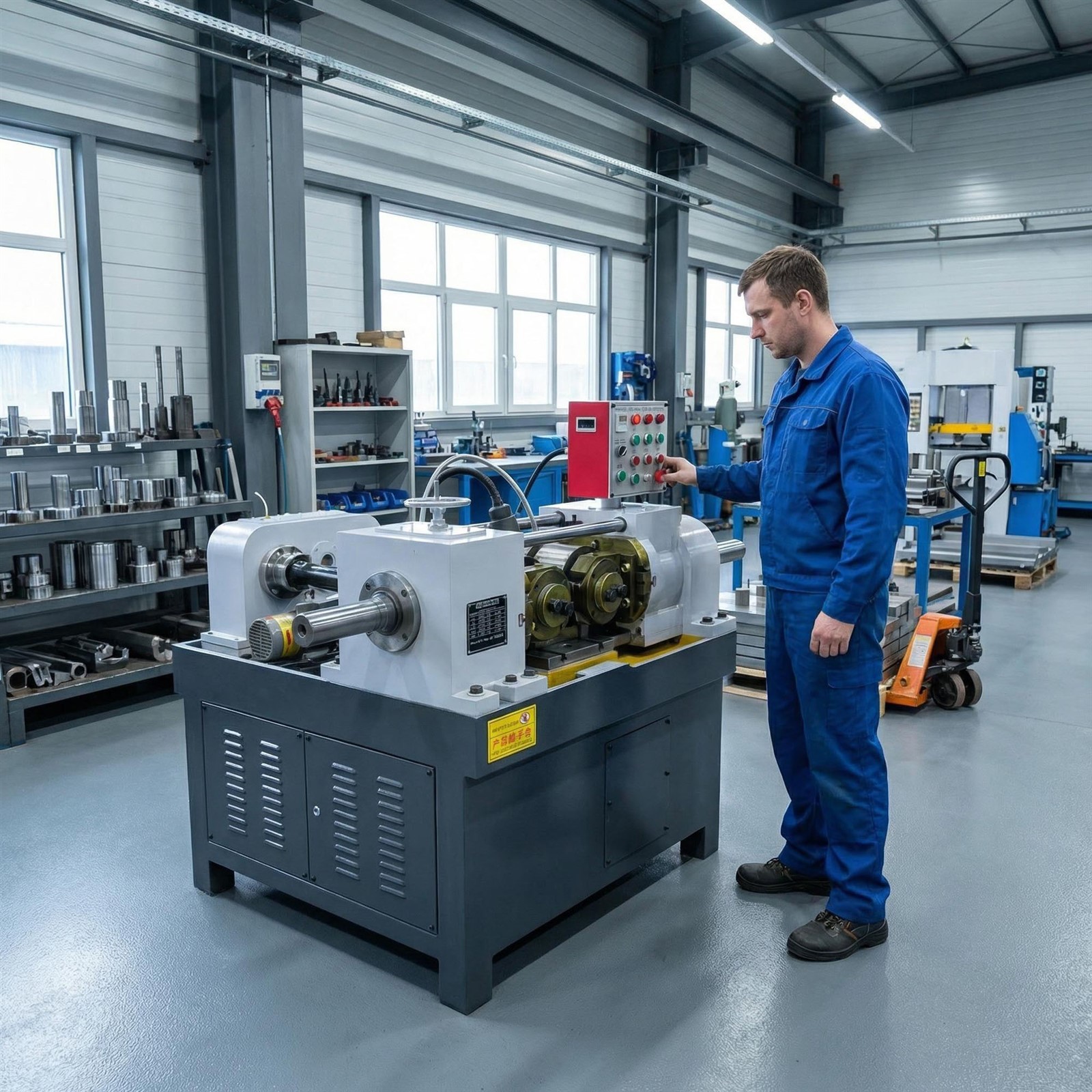
In terms of structural design, the two-axis hydraulic thread rolling machine adopts a welded body made of thick steel plates, and undergoes annealing treatment to eliminate internal stress, effectively ensuring the stability of the equipment after long-term use and preventing the impact of machine deformation on processing accuracy. Simultaneously, the equipment is equipped with dual hydraulic cylinders to drive the thread rolling wheels for feeding, ensuring uniform and controllable feed speed. Operators can flexibly adjust the hydraulic pressure according to the workpiece material (such as carbon steel, alloy steel, non-ferrous metals, etc.) and processing requirements, further improving processing adaptability. Operationally, the equipment features an intuitive and easy-to-understand control panel; key parameters such as thread rolling wheel speed, feed rate, and processing time can be set via buttons or knobs.

This lowers the learning curve for novice operators and improves overall production efficiency.
Z28-185 hydraulic threading machine specification sheet
|
Items |
Parameters |
|
|
diameter |
φ60mm |
|
|
thread pitch |
6mm |
|
|
Spindle Angle |
±10° |
|
|
Maximum rolling pressure |
250kn |
|
|
Spindle RPM |
Exchange gear 22/28/35/45/56/70rpm |
|
|
Thread rolling wheel range |
diameter |
φ210mm |
|
aperture |
φ75mm |
|
|
Maximum width |
160mm |
|
|
Spindle drive power |
11kw |
|
|
Hydraulic transmission power |
3kw |
|
|
Physical size |
1800×1600×1450mm |
|
|
Machine weight |
2100kg |
|

FAQ:
What are the functions of hydraulic threading machine thread rolling wheels?
I. The Role of Thread Rolling Wheels in Industrial Applications
Thread rolling wheels are an indispensable part of industrial manufacturing, especially in metal processing and forming. Through precise rolling and pressure, they can create continuous and regular threads on metal surfaces. These threads are not only aesthetically pleasing, but more importantly, they enhance the connection strength and stability of metal components. In high-speed machinery, the threads created by thread rolling wheels effectively reduce vibration and loosening, thus ensuring the safety and reliability of the entire system.
Furthermore, the high efficiency and precision of thread rolling wheels are also reasons why they are highly regarded in industrial applications. Modern industrial production pursues high efficiency, low cost, and high quality, and thread rolling wheels perfectly meet these demands. They can complete a large number of thread processing tasks in a short time with high precision, greatly reducing scrap and rework rates, saving companies significant time and costs.
II. The Role of Thread Rolling Wheels in Other Industries
Besides industrial applications, thread rolling wheels also play an indispensable role in other industries. In automotive parts manufacturing, thread rolling wheels are widely used in the processing of various screws, bolts, and nuts. These fasteners play a crucial role in the safety and stability of automobiles. Threads produced by thread rolling wheels ensure that fasteners maintain stable connection performance in various harsh environments.
In the aerospace field, the requirements for materials are extremely demanding. Thread rolling wheels, with their superior machining precision and stability, have won the favor of this industry. Whether it's bolts on aircraft engines or tiny screws on satellites, thread rolling wheels ensure the accuracy of every thread, providing strong support for the safe flight of aerospace vehicles.
Hot Tags: hydraulic threading machine, China hydraulic threading machine manufacturers, suppliers, factory


