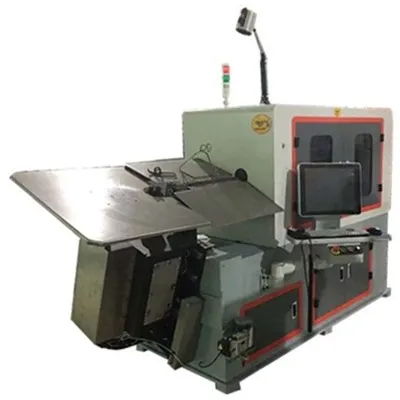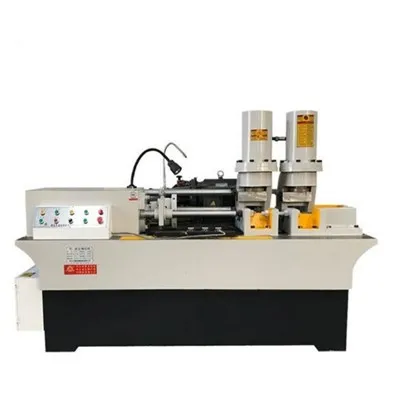

Hey there, folks! I'm a supplier of Pipe Thread Rolling Machines, and today I wanna chat about something super important: the threading surface roughness standard of a Pipe Thread Rolling Machine.
First off, let's get into what surface roughness is all about. In simple terms, surface roughness refers to the tiny bumps and valleys on the surface of a threaded pipe. These irregularities might seem small, but they can have a huge impact on the performance and quality of the threaded connection.
So, why does surface roughness matter in pipe threading? Well, a smooth threading surface is crucial for several reasons. For one, it ensures a tight and leak - free connection. When the threads are smooth, they can fit together more snugly, reducing the risk of fluid or gas leakage. This is especially important in applications where safety is a top concern, like in plumbing systems or industrial pipelines.
Secondly, a good surface roughness can enhance the durability of the threaded connection. Rough surfaces can cause excessive wear and tear over time, leading to premature failure of the connection. On the other hand, a smooth surface reduces friction and wear, increasing the lifespan of the pipes and fittings.
Now, the industry has set some specific standards for threading surface roughness of Pipe Thread Rolling Machines. These standards are put in place to ensure uniformity and quality across different products and applications.
One of the most commonly used standards for surface roughness is Ra (arithmetical mean deviation of the profile). Ra measures the average deviation of the surface profile from the mean line. In the case of pipe threading, the Ra value typically ranges from 1.6 to 6.3 micrometers, depending on the specific application and requirements.
For high - pressure applications, a lower Ra value is usually preferred. This means a smoother surface, which helps to maintain the integrity of the connection under high pressure. For example, in oil and gas pipelines, where the pressure can be extremely high, an Ra value of around 1.6 micrometers might be required.
On the other hand, for less demanding applications, like some general - purpose plumbing, an Ra value up to 6.3 micrometers could be acceptable. This allows for a bit more flexibility in the manufacturing process while still ensuring a reliable connection.
But how does a Pipe Thread Rolling Machine achieve the desired surface roughness? Well, it all comes down to the design and operation of the machine. A good quality Pipe Thread Rolling Machine is equipped with precision - engineered dies. These dies are designed to shape the threads on the pipe with a high level of accuracy, resulting in a smooth surface finish.
The material of the dies also plays a crucial role. High - quality tool steels are often used to make the dies, as they can withstand the high pressures and frictions involved in the threading process. This helps to maintain the sharpness of the die edges, which is essential for producing smooth threads.
In addition, the rolling speed and pressure settings of the machine need to be carefully adjusted. If the rolling speed is too high, it can cause excessive forces on the pipe surface, leading to a rougher finish. On the contrary, if the pressure is too low, the threads may not be formed properly, also affecting the surface quality.
As a supplier of Pipe Thread Rolling Machines, I've seen firsthand how important it is to meet these surface roughness standards. That's why we offer a range of high - quality machines, like our 3 Die Thread Rolling Machine and Pipe Thread Thread Rolling Machine. These machines are designed with the latest technology and precision engineering to ensure that the threading surface roughness meets or exceeds the industry standards.


Whether you're in the plumbing business, the oil and gas industry, or any other field that requires threaded pipes, our Pipe Thread Rolling Machines can provide you with the reliable and high - quality threading solutions you need.
If you're interested in learning more about our products or have any questions regarding the threading surface roughness standards, don't hesitate to reach out. We're here to help you make the right choice for your business. Our team of experts can provide you with detailed information, answer your queries, and even offer on - site demonstrations if needed.
So, if you're looking for a Pipe Thread Rolling Machine that can deliver the perfect surface roughness for your applications, look no further. Contact us today and let's start a great business partnership!
References
- Metal Cutting and Machining Handbook
- Pipe Threading Industry Standards Manual