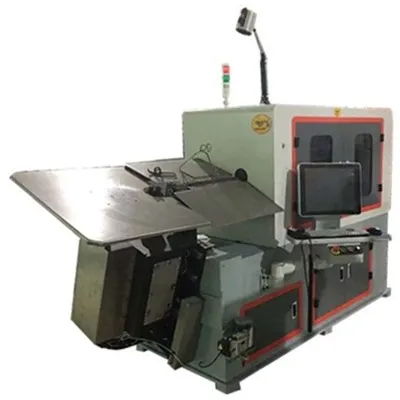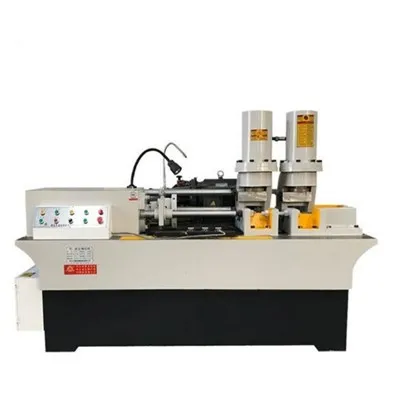

In the dynamic landscape of manufacturing, precision and efficiency are paramount, especially when it comes to wire bending operations. As a seasoned supplier of cutting-edge 3D wire bending machines, I've witnessed firsthand how these technological marvels revolutionize the process of shaping wires into intricate forms. One of the most critical aspects in wire bending is managing wire tension during the bending process, which not only determines the quality of the final product but also affects the overall productivity and machine longevity. In this blog, I'll delve into the mechanisms and strategies employed by 3D wire bending machines to handle wire tension effectively.
Understanding the Importance of Wire Tension in Bending
Before exploring how 3D wire bending machines manage tension, it's crucial to understand why tension control matters. Wire tension directly impacts the accuracy and consistency of bent parts. If the tension is too high, the wire may break during the bending process, leading to production downtime and material waste. Conversely, insufficient tension can cause the wire to slip or bend unevenly, resulting in sub - standard products. Moreover, proper tension control is essential for ensuring that the wire maintains its shape after bending, which is crucial for applications where precision is key.


Mechanisms for Tension Control in 3D Wire Bending Machines
Pre - tensioning Systems
Many of our 3D Cnc Wire Bending Machine are equipped with pre - tensioning systems. These systems are designed to apply a consistent initial tension to the wire before it enters the bending area. One common method is through the use of friction brakes. These brakes can be adjusted to vary the amount of resistance applied to the wire spool, allowing operators to set the desired pre - tension level. By starting with a well - controlled pre - tension, the bending process can begin with greater accuracy.
Another approach in pre - tensioning is the use of dancer arms. A dancer arm is a pivoted arm with a pulley that comes into contact with the wire. As the wire moves, the position of the dancer arm changes, and this movement is used to control a motor or a brake that adjusts the tension. Dancer arms are effective in maintaining a constant tension, especially when the wire feed speed fluctuates.
In - line Tension Sensors
Modern 3D wire bending machines, like our Automatic 3D Wire Bending Machine, often incorporate in - line tension sensors. These sensors are placed along the wire path and continuously monitor the tension of the wire during the bending process. The sensors work by measuring the force exerted on a pulley or a roller by the passing wire.
The data from the tension sensors is then sent to the machine's control system. If the tension deviates from the set value, the control system can make real - time adjustments. For example, if the tension is too high, the control system can reduce the feed rate of the wire or adjust the braking force. On the other hand, if the tension is too low, it can increase the feed rate or apply more braking.
Bending Tool Design
The design of the bending tools also plays a significant role in wire tension management. The shape and surface finish of the bending tools can affect how the wire is bent and the tension it experiences during the process. Our Flat Wire forming Machine uses specialized tools that are engineered to minimize friction and ensure smooth bending.
For instance, the bending dies are often made with a high - quality, low - friction material. This reduces the resistance the wire encounters as it is bent, helping to maintain consistent tension. Additionally, the geometry of the bending dies is carefully designed to match the wire diameter and the desired bend radius. This ensures that the wire is bent at the correct angle without excessive stretching or compression, which could cause tension variations.
Strategies for Optimal Tension Handling
Programming and Simulation
Advancement in CAD/CAM software has made it possible to program and simulate the wire bending process before actual production. By inputting the wire properties, part design, and bending sequence into the software, operators can analyze the expected tension at different stages of the bending process. This allows them to optimize the bending program to minimize tension fluctuations.
For example, the software can suggest the best feed rate and bending speed combinations to maintain stable tension. It can also identify potential problem areas, such as sharp bends that may cause high tension, and recommend alternative bending strategies.
Operator Training
Even with the most advanced technology, the importance of well - trained operators cannot be overstated. Operators need to understand the principles of wire tension control and how to use the machine's tension - control features effectively. Our company provides comprehensive training programs for our customers, covering everything from basic machine operation to advanced tension - management techniques.
During the training, operators learn how to set the correct pre - tension, interpret the data from the tension sensors, and make adjustments based on the quality of the bent parts. They also gain hands - on experience in troubleshooting tension - related issues, such as wire breakage or uneven bends.
Impact on Product Quality and Efficiency
Effective wire tension control has a profound impact on both product quality and production efficiency. With consistent tension, the bent parts have a more accurate shape and dimensions, reducing the need for post - processing operations such as straightening or re - bending. This not only improves the overall quality of the products but also saves time and labor costs.
In terms of efficiency, proper tension control minimizes wire breakage and machine downtime. By preventing wire breakages, the machine can run continuously, increasing the production output. Additionally, the reduced need for manual intervention due to improved quality control further enhances the efficiency of the production process.
Conclusion
Managing wire tension during the bending process is a complex but essential aspect of 3D wire bending machine operation. Through advanced mechanisms such as pre - tensioning systems, in - line tension sensors, and well - designed bending tools, along with effective strategies like programming and operator training, 3D wire bending machines can handle wire tension with precision.
If you're looking to enhance your wire - bending operations and achieve superior product quality, our range of 3D wire bending machines can provide the solution you need. We're committed to delivering innovative and reliable machines that are designed to meet the diverse needs of the manufacturing industry. Whether you're a small - scale workshop or a large - scale production facility, our machines can help you take your wire - bending capabilities to the next level. Contact us today to discuss your specific requirements and explore how our 3D wire bending machines can transform your production process.
References
- Smith, J. (2020). Advanced Wire Bending Technologies. Manufacturing Journal, 15(2), 45 - 56.
- Johnson, A. (2019). Tension Control in Precision Manufacturing. Industrial Engineering Review, 22(3), 78 - 89.
- Brown, C. (2021). The Role of Bending Tools in Wire Tension Management. Engineering Innovations, 30(1), 23 - 35.