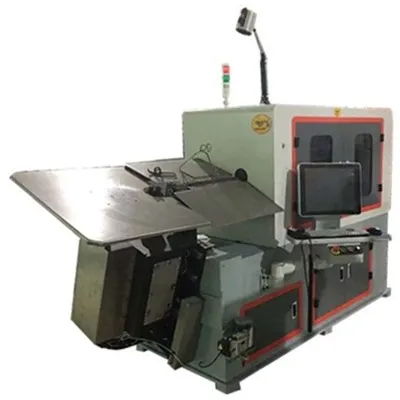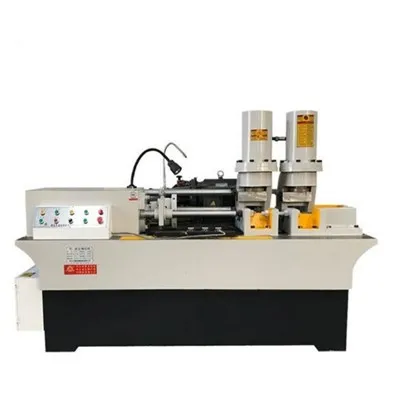

In the modern manufacturing landscape, the pursuit of efficiency, precision, and cost - effectiveness has led many industries to embrace automated production lines. As a supplier of Steel Wire Bending Machines, I often get asked whether our machines can be integrated into such automated setups. In this blog post, I'll explore the technical, economic, and practical aspects of integrating a steel wire bending machine into an automated production line.
Technical Feasibility
Compatibility with Automation Systems
The first consideration for integrating a steel wire bending machine into an automated production line is its compatibility with existing automation systems. Modern steel wire bending machines, such as the Wire Bending Machine Cnc and Wire Bending Cnc Machine, are designed with advanced control systems. These systems can communicate with other components of an automated line, such as robotic arms, conveyors, and sensors.
For example, a CNC - controlled steel wire bending machine can receive instructions from a central control unit. This unit can be programmed to coordinate the entire production process, ensuring that the wire bending machine starts and stops at the right time, and that the bending operations are synchronized with other manufacturing steps. The machine's control system can also be configured to adjust parameters such as bending angles, wire feed speed, and the number of bends based on real - time data from sensors in the production line.
Integration with Material Handling
Automated production lines rely on efficient material handling systems to move raw materials and finished products between different stations. A steel wire bending machine needs to be integrated seamlessly with these material handling systems. This can involve using conveyors to feed the wire into the machine and remove the bent parts after processing.
Robotic arms can also be used to load and unload the wire from the bending machine. These arms can be programmed to pick up the wire from a storage area, place it accurately in the machine, and then transfer the finished bent part to the next stage of production. This not only improves the speed of the production process but also reduces the risk of human error and injury.
Quality Control and Monitoring
In an automated production line, quality control is of utmost importance. A steel wire bending machine can be equipped with sensors and monitoring systems to ensure that the bent parts meet the required specifications. These sensors can detect defects such as incorrect bending angles, wire breakage, or surface imperfections.
The data collected by these sensors can be sent to the central control unit for analysis. If a defect is detected, the control unit can stop the production line, alert the operators, and take corrective actions. This real - time quality control helps to maintain high - quality standards and reduces the number of defective products.
Economic Considerations
Cost - Benefit Analysis
Integrating a steel wire bending machine into an automated production line involves significant upfront costs. These costs include the purchase of the bending machine itself, the cost of modifying the machine for integration, and the investment in additional automation equipment such as conveyors and robotic arms.
However, in the long run, the benefits can outweigh the costs. Automated production lines can increase productivity by reducing the time required for manual operations. They can also improve the quality of the products, which can lead to higher customer satisfaction and increased sales. Additionally, the reduced labor costs associated with automation can result in significant savings over time.
Return on Investment (ROI)
Calculating the ROI of integrating a steel wire bending machine into an automated production line requires considering several factors. The increased production volume, improved product quality, and reduced labor costs all contribute to the potential ROI.
For example, if a company currently produces 1000 bent wire parts per day using manual labor, and after integrating the steel wire bending machine into an automated line, the production volume increases to 1500 parts per day, the additional revenue generated can be a significant factor in determining the ROI. The reduction in labor costs, as fewer workers are needed to operate the machine, also contributes to the overall financial benefit.
Practical Challenges and Solutions
Technical Expertise
Integrating a steel wire bending machine into an automated production line requires technical expertise. Companies may need to hire or train employees who are familiar with both the bending machine's control systems and the automated production line technology.
To address this challenge, our company provides comprehensive training programs for our customers. These programs cover the operation, maintenance, and integration of our Steel Wire Bending Machine with automated production lines. We also offer technical support services to help customers troubleshoot any issues that may arise during the integration process.
System Complexity
Automated production lines are complex systems, and integrating a steel wire bending machine can add to this complexity. There is a risk of system failures or malfunctions, which can disrupt the entire production process.


To mitigate this risk, our machines are designed with redundant systems and fail - safe mechanisms. These features ensure that the machine can continue to operate safely even in the event of a component failure. Additionally, our technical support team can provide remote monitoring and diagnostic services to detect and resolve potential issues before they cause significant disruptions.
Case Studies
Automotive Industry
In the automotive industry, steel wire bending machines are often integrated into automated production lines for the manufacturing of components such as seat frames and suspension parts. For example, a major automotive manufacturer integrated our steel wire bending machine into an existing automated line. The machine was connected to a robotic arm and a conveyor system, allowing for continuous production of seat frame components.
The integration resulted in a 30% increase in production volume and a significant improvement in the quality of the bent parts. The company also reported a reduction in labor costs and a shorter lead time for product delivery.
Furniture Manufacturing
In the furniture manufacturing industry, steel wire bending machines are used to produce components such as chair frames and sofa springs. A furniture manufacturer integrated our machine into an automated line that included a laser cutting machine and a powder coating station.
The seamless integration of the steel wire bending machine with the other components of the line allowed for a more efficient production process. The company was able to produce higher - quality furniture components at a lower cost, which gave them a competitive edge in the market.
Conclusion
In conclusion, a steel wire bending machine can be successfully integrated into an automated production line. The technical capabilities of modern CNC - controlled machines, along with advancements in automation technology, make it possible to achieve seamless integration. While there are economic challenges associated with the upfront investment, the long - term benefits in terms of increased productivity, improved quality, and reduced costs make it a viable option for many manufacturers.
If you are considering integrating a steel wire bending machine into your automated production line, I encourage you to contact us. Our team of experts can provide you with detailed information about our products, offer customized solutions based on your specific requirements, and assist you throughout the integration process. We are committed to helping you achieve greater efficiency and profitability in your manufacturing operations.
References
- "Automation in Manufacturing: Principles and Applications" by David A. Dornfeld
- "CNC Machining Handbook" by Peter Smid
- Industry reports on the integration of metalworking machines in automated production lines.